QUASAR-CREATE · Thrust 3Quantum Migration and Cryptographic AgilitySECURING THE PATH FROM EMBEDDED SYSTEMS TO FUTURE INTERNET INFRASTRUCTURE
Thrust 3 develops methods and technologies for quantum-safe migration and crypto-agility across telecommunications spectrum to inter-connected cyber-physical systems. Human-interactive systems - including robots, wearables and assistive technologies - define the security, privacy, safety, performance and lifecycle requirements of embedded and resource-constrained devices. These requirements shape migration architectures spanning embedded and edge platforms, private and public 5G/6G networks, national communications infrastructure and future Internet architectures.
MIGRATION BLUEPRINTS AND CRYPTO-AGILE INTEGRATION · FUTURE NETWORKS AND EMERGING TECHNOLOGIES · LONG TERM SECURITY FOR APPLCIATION AND MISSION-CRITICAL USE CASES
Quantum-Safe Migration for Future Networks
As communication networks become more intelligent, autonomous and interconnected, they must evolve beyond cryptographic mechanisms that become vulnerable in the quantum era.
Future networks increasingly connect people with robots, wearables, assistive technologies and autonomous systems. These human-interactive applications depend on secure communication across resource-constrained devices, edge platforms and private and public network infrastructures. Their cryptographic protection must accommodate mobility, real-time performance, long system lifecycles, changing trust relationships and intermittent connectivity. Migration must preserve security, privacy, safety and service continuity while algorithms, credentials and network technologies evolve.
Thrust 3 develops migration models, crypto-agile architectures and validation blueprints and proof-of-concept prototypes for integrating our PQC and hybrid PQC/QKD mechanisms for ressource restricted embedded systems to telecommunications and next generation networks infrastructure.
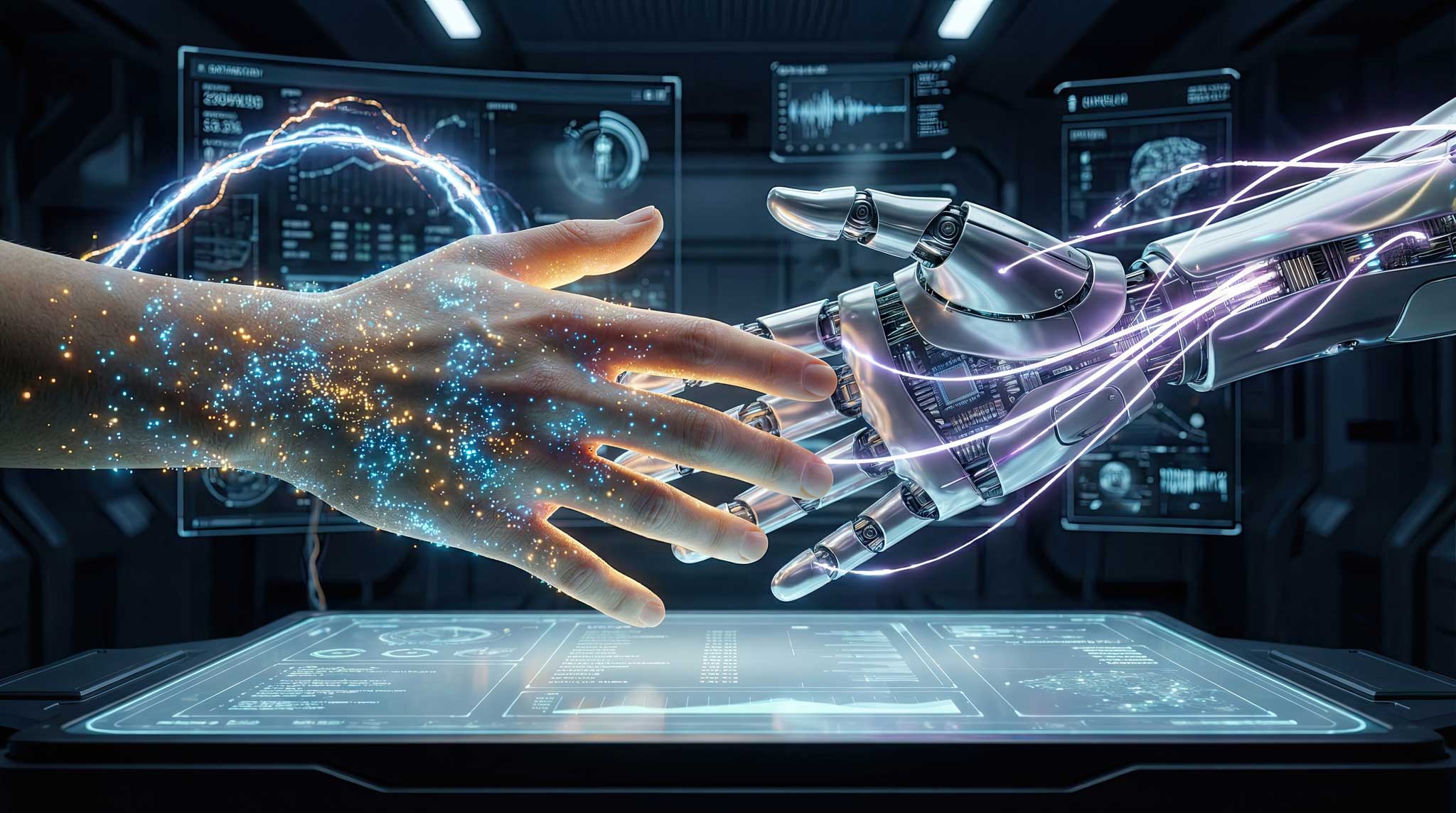
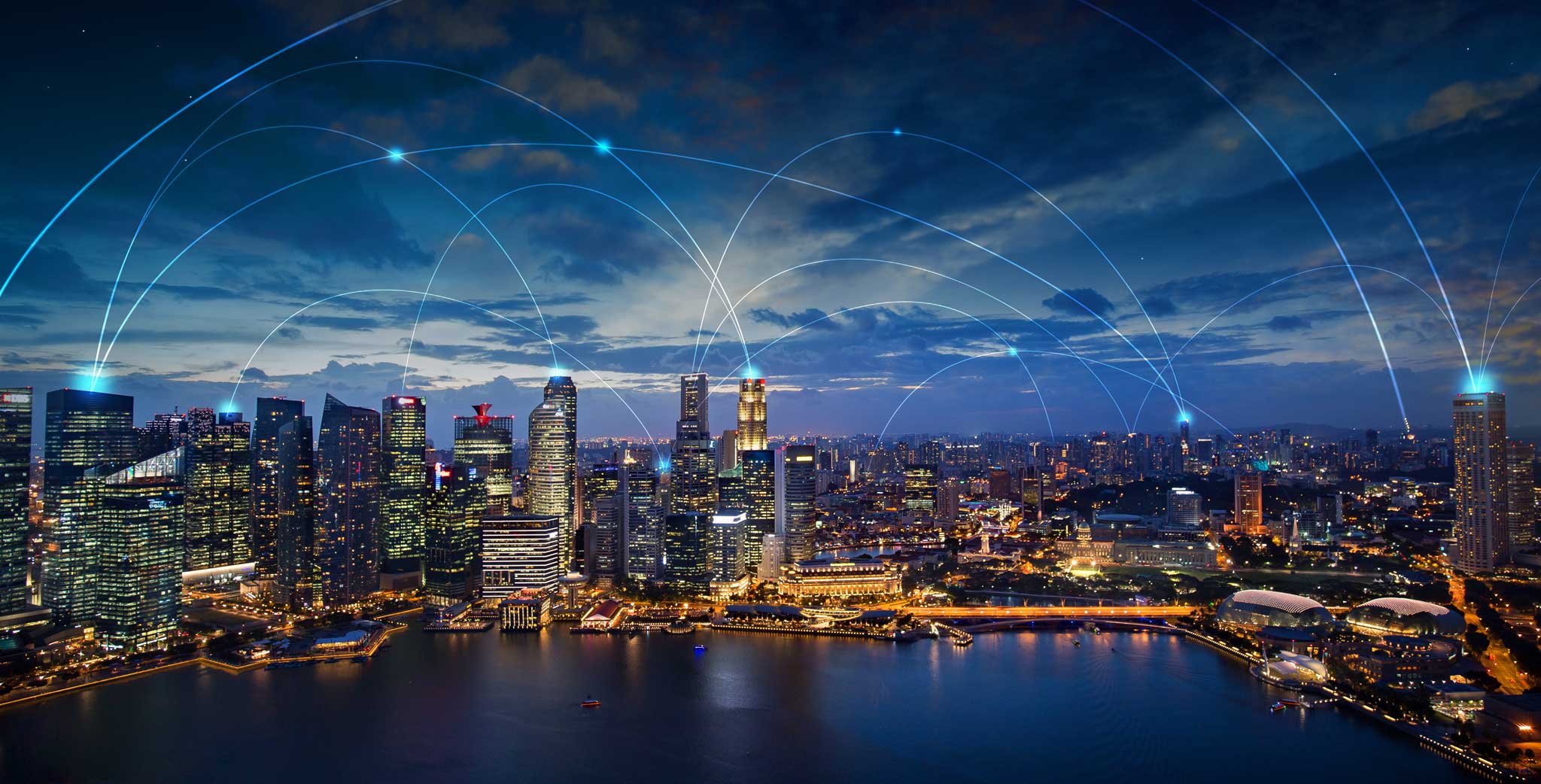
HUMAN–ROBOT INTERACTION
Secure Interaction of Interconnected Systems
Robots and autonomous systems operating around people depend on trustworthy identities, authenticated control, protected sensor data and secure intelligence. Thrust 3 investigates how quantum-safe and crypto-agile mechanisms can preserve security, safety, privacy and operational continuity under mobility, real-time constraints, changing conditions and limited resources constraints.
Research Areas
Three integrated research areas address the migration, operation and validation of quantum-safe security in complex next-generation infrastructures. The work covers quantum-safe migration models, cryptographic agility for resource- and mission-constrained platforms and applications, and quantum-safe integration and assurance for future networks.
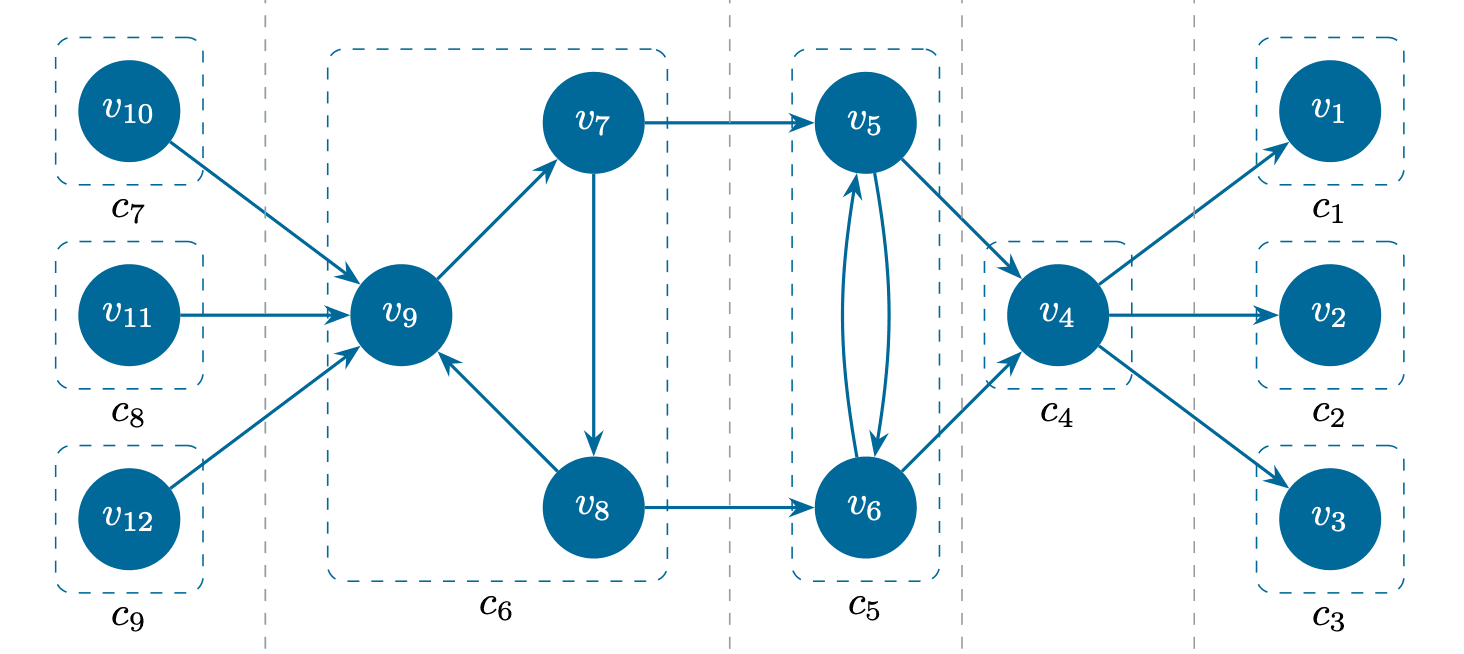
Quantum-Safe Migration Models for Complex Infrastructures
Large-scale cryptographic migration is not a simple replacement of algorithms. It requires understanding dependencies between network components, protocols, certificates, hardware, operators, regulatory requirements and legacy systems. Thrust 3 develops semi-formal migration models and crypto-agility methods to plan, prioritize and execute the transition to quantum-safe infrastructures with minimal service disruption.
Key Areas and Focus
- →Actionable migration roadmaps
- →Semi-formal dependency and migration models
- →AI-enhanced CBOM and migration-inventory tools
- →Quantum-safe PKI and certificate migration profiles
- →Messaging, code-signing and secure-update trust scenarios
- →Trust and security guarantees and continuity strategies
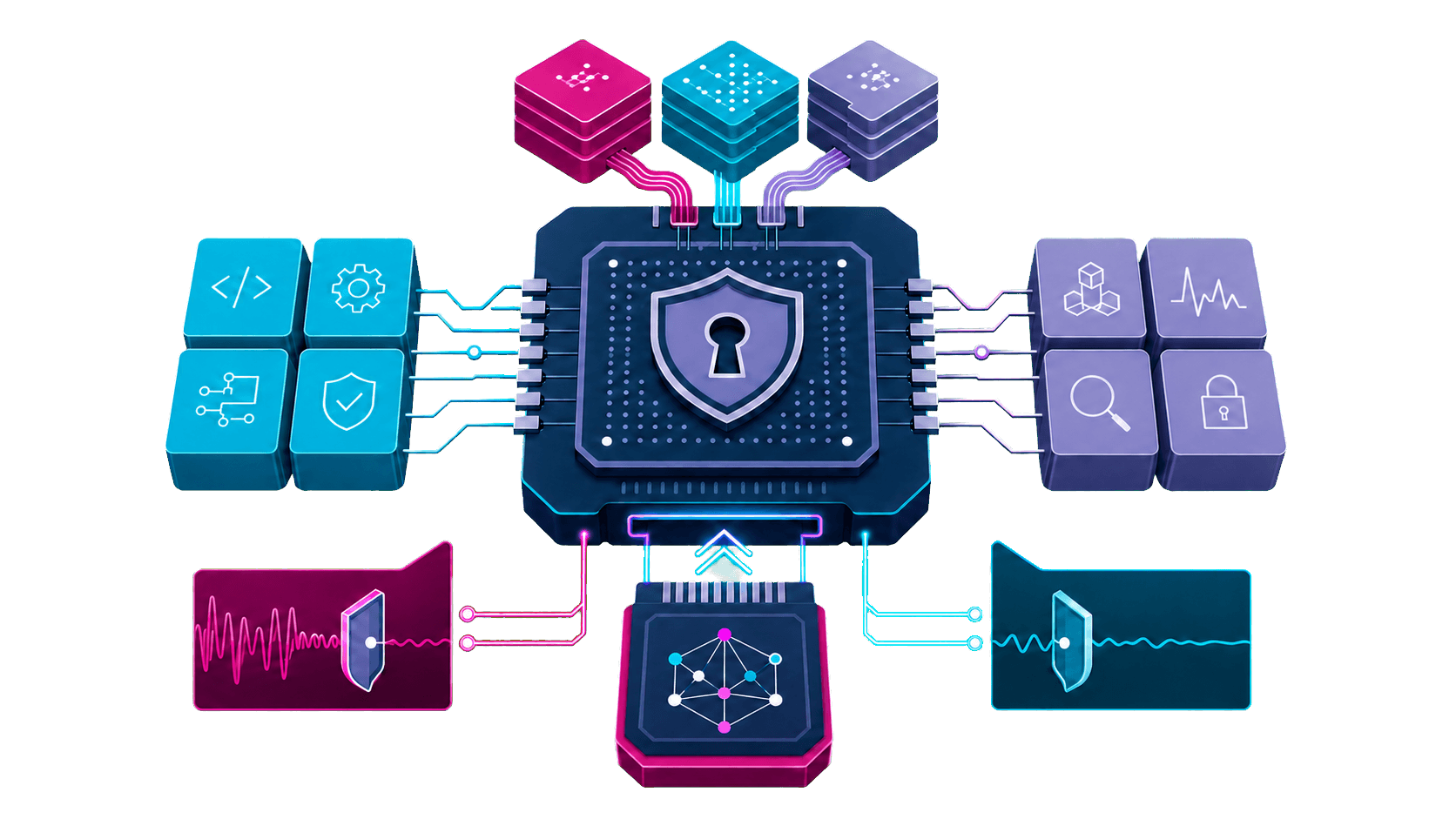
Crypto-Agile Hardware–Software Engineering for PQC and Hybrid PQC/QKD
Quantum-safe implementations requires cryptographic primitives and protocols that can evolve securely across software and hardware. We investigate agility aspects for hardware–software architectures, side-channel leakage contracts and implementation methods for post-quantum and hybrid quantum-resilient cryptography. The work covers adaptable primitives and protocols across software, reconfigurable hardware and hardware–software co-design. Cross-layer leakage contracts guide secure implementation, verification and countermeasures while enabling algorithms, parameters and hybrid mechanisms to evolve safely.
Key Areas and Focus
- →Cryptographic Agility for Resource- and Mission-constrained Platforms and Applications
- →Adaptable and reconfigurable primitives and protocols for PQC and hybrid PQC/QKD
- →Cross-layer HW/SW leakage contracts and security verification under agility requirements
- →Side-channel and countermeasures within platform resource budgets and attack models

Quantum-Safe Integration from Systems to Networks
This research area investigates how quantum-safe trust can be composed, adapted and assured across human-interactive systems and their communication environments. Robots, assistive technologies and wearables provide demanding reference scenarios for integrating trusted identities, protected data and control flows, secure updates and resilient connectivity across constrained devices, edge platforms and future networks.
Key Areas and Focus
- →Compositional trust and security models
- →Device-to-edge-to-network reference architectures
- →Crypto-agile identity, communication and update lifecycles
- →Validation under mobility, resource and connectivity constraints
- →Robotics, wearable and assistive-technology demonstrators
- →Assurance cases, deployment profiles and transferable test evidence
Research Team
Principal investigators and researchers from the QUASAR-CREATE consortium driving post-quantum migration and crypto-agility research.

Michael Kasper
Assoc. Professor , Principal Investigator, Director Fraunhofer Singapore
Fraunhofer Singapore, NTU

Zhang Tianwei
Professor, Principal Investigator
Nanyang Technological University (NTU)

Daniel Loebenberger
Professor, Principal Investigator
Fraunhofer AISEC, University Amberg-Weiden

Ruben Niederhagen
Professor, Principal Investigator
Fraunhofer Singapore, Academica Sinica

Thomas Magedanz
Professor, Co-PI, Collaborator
Fraunhofer FOKUS, TU Berlin

Sze Thing Goh
Manager, Thrust 2 & 3
Fraunhofer Singapore, NTU
Sriram Vasudevan
Coordinator, Thrust 3
Fraunhofer Singapore, NTU

Siyi Wang
Research Fellow, Thrust 3
Nanyang Technological University (NTU)

Nikhil Bartake
Research Engineer & PhD Student
Fraunhofer Singapore, NTU
Work With Us on Quantum-Safe Migration and Security in Next Generation Networks
Thrust 3 collaborates with telecom operators, satellite providers, network engineers, and policymakers to develop scalable blueprints and agile testbeds for the 6G post-quantum transition.
Consulting
Support
Security evaluation, certification advisory, and training services.
Join the
Team
Explore job opportunities and PhD positions in our group.
Research Collaboration
Joint projects, and publication collaboration.
Training
& Workshops
Request training programmes and workshops on QKD and PQC security.